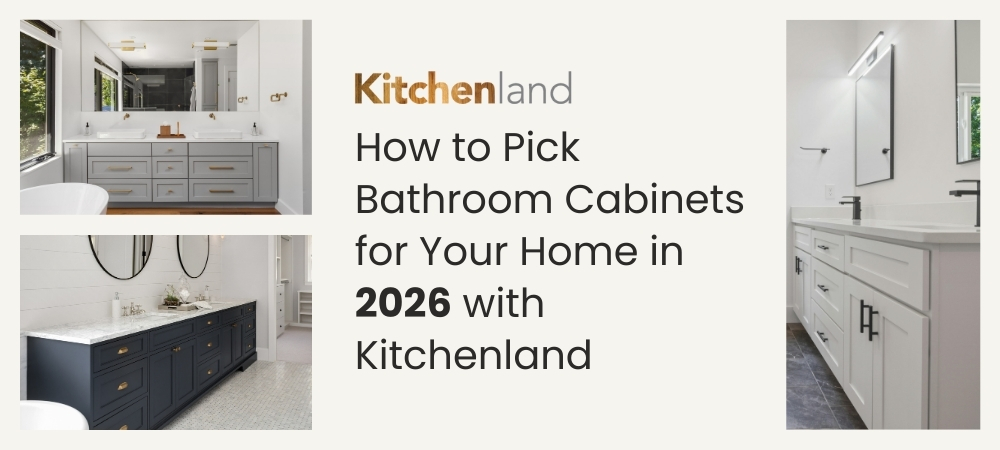
Bathroom cabinets are key to how the space functions, feels, and holds up to daily living. Today's homeowners are balancing:
- Smaller footprints
- Higher humidity levels
- Growing demand for clean design
The right cabinetry can:
- Make a compact bathroom feel open
- Keep daily essentials organized
- Withstand moisture exposure
The best option depends on:
- Your bathroom's size
- How often it's used
- How much maintenance you're willing to take on long-term
In this guide, you'll learn how to choose bathroom cabinets in 2026 by evaluating:
- Layout
- Cabinet types
- Materials
- Styles
- Storage solutions
- Finishes
- Budget
1. Understand Your Bathroom Layout & Size
A. Small Bathrooms & Powder Rooms
In smaller bathrooms, cabinet selection should focus on leveraging usable space. Floating bathroom vanities are effective because they keep the floor clutter-free. Shallow-depth cabinets are another smart choice for:
- Powder rooms
- Narrow layouts
They offer essential storage for toiletries and cleaning supplies while maintaining:
- Comfortable walkways
- Clear sightlines
B. Standard & Large Bathrooms
Larger bathrooms allow for more flexibility. Homeowners often choose between bathroom vanities based on:
- Household needs
- Available wall space
- Plumbing locations
Two popular bathroom vanity styles are:
- Double Vanities - work well in shared bathrooms.
- Oversized Single Vanities - offer generous counter and drawer space.
- Free-Standing Cabinets - add storage and visual grounding in larger layouts.
Tip: Before finalizing cabinet dimensions, account for:
- Clearance space
- Door or drawer swing
2. Choose the Right Cabinet Type
Bathroom cabinets come in several configurations, and each serve a purpose. Picking the right combination improves function and visual flow.
- Floating Vanities - ideal for modern bathrooms and smaller spaces.
- Freestanding Bathroom Cabinets - provide flexibility and traditional appeal.
Today, the focus is on:
- Efficient drawer layouts
- Integrated sinks
- Moisture-resistance
A strategic mix of cabinet types often delivers the best blend of:
- Storage
- Convenience
- Visual interest
3. Materials That Perform Well
Material choice is one of the most important factors in cabinet longevity. 65-70% of homeowners prioritize moisture-resistance as the top factor when picking bathroom cabinets.
MDF and engineered wood make up 50% of bathroom cabinet materials. Advances in manufacturing have improved its stability. This makes it suitable for painted finishes and contemporary designs.
Solid wood is best used selectively, while plywood construction is widely preferred for cabinet boxes because of its:
- Strength
- Durability
- Resistance to warping
| Material | Best For | Key Benefit |
|---|---|---|
| Plywood | Cabinet Boxes | Superior strength and warp resistance. |
| MDF | Painted Finishes | Smooth surface; highly moisture stable. |
| Solid Wood | Accents/Frames | Premium feel; best in well-ventilated areas. |
| Laminates | High-Traffic | Scratch-resistant and easy to sanitize. |
4. Bathroom Cabinet Styles
2026 styles emphasize simplicity, flexibility, and timeless appeal.
- Minimalism - Flat panels, clean lines, and minimal hardware. They're ideal for contemporary homes and smaller bathrooms where visual simplicity enhances openness.
- Traditional – Shaker-style cabinets clean frame design works well in classic bathrooms.
- Frameless - Frameless cabinets are increasingly popular for their sleek appearance and increased interior space. Without a face frame, they allow:
- Wider drawers
- Better access
5. Storage & Organization Features to Search For
Homeowners want interiors that work efficiently. Must-have features are:
- Soft-close drawers and doors
- Full-extension drawers
- Built-in dividers
- Pull-out organizers
- Adjustable shelves
6. Cabinet Finishes and Colors
Color and finish trends in 2026 lean:
- Warm
- Calm
- Practical
Popular choices are:
- Warm whites and off-whites, like Kitchenland's Classic Snow.
- Soft wood tones, like Omni Beachwood.
- Subtle neutrals:
- Taupe
- Greige
- Light oak
Designers love matte finishes because they keep cabinets looking clean, hiding fingerprints with ease, while textured laminates bring a gentle sense of depth.
7. Care, Durability & Lasting Value
Well-built bathroom cabinets are designed to stand the test of time. Sealed edges keep moisture out, while smooth, easy-to-clean surfaces make every day upkeep a breeze. Investing in quality cabinets pays off in long-term value.
Budget Considerations Without Compromising Quality
When budgeting, prioritize the:
- Cabinet box
- Hardware
These components determine:
- Structural integrity
- Lasting performance
Final Checklist
- Cabinet size and layout fit the space.
- Moisture-resistant materials selected
- Storage features match daily usage.
- Finish complements the overall bathroom design.
- Warranty and durability meet long-term needs.
Level-Up Your Space with Kitchenland
Kitchenland offers a curated selection of bathroom cabinetry that meets the rigorous demands of 2026. As a premier provider of custom and semi-custom cabinetry, Kitchenland specializes in:
- Precision engineering
- Modern aesthetics
- Personalized service
Final Takeaways
Picking the right bathroom cabinets in 2026 means balancing style with performance. Prioritize smart design choices that support daily routines, not just trends. Exploring expertly crafted bathroom cabinet options can simplify the process and deliver lasting value. Explore Kitchenland options today!
FAQs
What are the best cabinet materials for high-humidity bathrooms?
Plywood is the top choice for cabinet boxes because of its warp resistance. MDF is excellent because it remains stable in moisture.
How do I choose between floating and freestanding vanities?
Floating vanities are ideal for modern, small spaces as they keep the floor clear and create an open feel. Freestanding cabinets offer a more traditional look.
What cabinet styles are trending for 2026?
Minimalist flat panels and classic Shaker-style frames are leading trends. Frameless cabinets are also popular for their increased interior storage space.
How can I make a small bathroom feel larger with cabinetry?
Use shallow-depth cabinets to maintain clear walkways and opt for light, warm neutrals or soft wood tones to expand the sense of space.